
New Health Research in 2026: The Medical Breakthroughs Changing Modern Healthcare 🧬🏥
Introduction: A New Era of Medical Discovery 🌍
Healthcare is changing rapidly in 2026. Researchers are combining artificial intelligence, genetics, molecular biology, advanced imaging, biotechnology, and large-scale health datasets to investigate diseases in ways that were difficult to imagine only a decade ago.
The most important trend is not necessarily one single “miracle breakthrough.” Instead, modern medical research is becoming increasingly precise, personalized, data-driven, and preventive.
Scientists are developing smaller and more targeted gene-editing systems, exploring AI-assisted diagnosis, creating increasingly detailed molecular maps of diseases, studying the relationship between the gut microbiome and human health, and investigating new approaches to cancer and neurodegenerative disease.
At the same time, researchers are becoming more careful about distinguishing promising discoveries from treatments that have actually been demonstrated to work in large clinical trials.
This distinction is particularly important in 2026. A discovery in cells or animals can provide an important scientific clue, but it does not automatically mean that the same intervention will be safe or effective in humans.
Against this background, several areas stand out as particularly important for the future of healthcare.
1. CRISPR Gene Editing Is Becoming More Precise 🧬


CRISPR has become one of the most important technologies in biomedical research because it gives scientists a programmable way to modify genetic material.
In 2026, researchers are working on an important problem: how to deliver gene-editing machinery to the right cells inside the human body.
A major NIH-funded study reported in April 2026 identified a naturally occurring CRISPR enzyme called Al3Cas12f that is small enough to fit into adeno-associated virus delivery systems. Researchers subsequently engineered the enzyme to improve its gene-editing performance in human cells. The work could potentially expand the possibilities for delivering gene-editing systems directly inside the body. (National Institutes of Health)
This is important because delivery has been one of the major obstacles facing gene therapy.
Many gene-editing approaches work by removing cells from the body, modifying them in a laboratory, and returning them to the patient. Researchers would like to develop more approaches in which therapeutic genetic instructions can be delivered directly to the relevant tissues.
Research published in 2026 also shows how the gene-editing field is expanding beyond traditional CRISPR-Cas9. Scientists are investigating base editors, prime editors, Cas12 and Cas13 systems, and other approaches capable of making increasingly specific genetic changes. (Nature)
Why this matters
The potential applications are enormous.
Researchers are investigating gene editing for inherited diseases, blood disorders, cancer, neurological diseases, metabolic disorders, and other conditions in which a specific genetic mechanism contributes to illness.
But important challenges remain, including delivery, unintended genetic changes, immune reactions, manufacturing, cost, and long-term safety.
Therefore, the 2026 research landscape should be understood as a period of rapid development, rather than evidence that gene editing can already treat every genetic disease.
2. Artificial Intelligence Is Becoming a Medical Research Tool 🤖


Artificial intelligence is moving beyond simple automation.
Researchers are increasingly exploring AI for analyzing medical images, interpreting biological data, identifying disease patterns, designing experiments, discovering drug candidates, and supporting clinical research.
One particularly important development is the emergence of AI systems that can work with multiple types of information simultaneously.
For example, cancer researchers can potentially combine genomic information, pathology images, medical records, imaging, and other molecular measurements. A 2026 Nature Reviews Cancer review described the growing importance of integrating multi-omics and clinical information using AI in cancer research. (Nature)
AI agents are another emerging research direction.
A 2026 Nature Reviews Cancer article examined how AI agents could potentially assist cancer research and oncology workflows. These systems are designed not merely to classify information but to plan and coordinate sequences of tasks. (Nature)
This could eventually allow researchers to automate portions of complex workflows such as literature analysis, data preparation, hypothesis generation, and experimental planning.
However, AI is not infallible.
Biomedical data can be incomplete, biased, inconsistent, or difficult to interpret. An AI system can also produce incorrect conclusions that appear convincing.
For that reason, human validation remains essential.
The most realistic future is therefore not necessarily “AI replaces doctors and scientists.” Instead, healthcare could increasingly involve doctors, researchers, patients, and AI systems working together.
3. AI Is Also Transforming Alzheimer’s Research 🧠
Alzheimer’s disease is another area where artificial intelligence and advanced molecular research are converging.
In September 2026, NIH reported a major research effort producing high-resolution molecular maps of Alzheimer’s and related neurological and neuropsychiatric disorders. The project examines disease biology at single-cell resolution and is intended to provide new information about disease mechanisms, diagnosis, prevention, and treatment. (National Institutes of Health)
This represents an important change in neuroscience.
Instead of treating the brain as a single system, researchers can increasingly examine individual cell populations and their molecular characteristics.
NIH’s 2026 Alzheimer’s research progress report also describes AI and machine-learning approaches for dementia diagnosis and risk assessment. One NIH-supported tool, StateViewer, uses PET brain imaging and machine learning to distinguish patterns associated with nine forms of dementia-related neurodegeneration, including Alzheimer’s. (NIA)
Other research is attempting to estimate biological markers associated with Alzheimer’s without relying exclusively on expensive imaging.
This could eventually make early assessment more scalable.
The importance of early detection
One of the biggest goals in Alzheimer’s research is identifying disease-related biological changes earlier.
By the time severe symptoms appear, significant changes may already have occurred in the brain.
Researchers are therefore investigating blood biomarkers, imaging, genetics, digital cognitive testing, AI-based analysis, and molecular profiling.
The ultimate goal is to identify individuals at risk earlier enough that preventive or disease-modifying interventions have a better opportunity to work.
4. New Molecular Maps Could Change Brain Disease Research 🔬
Traditional medical research often studies one protein, gene, or pathway at a time.
Modern technologies increasingly allow scientists to study thousands of biological signals simultaneously.
The 2026 NIH-supported molecular mapping work in Alzheimer’s and related diseases is an example of this approach. Researchers are using single-cell methods to examine the molecular characteristics of individual cells across different brain disorders. (National Institutes of Health)
This type of research can help scientists ask questions such as:
Which cells change first?
Which molecular pathways become abnormal?
Why do some brain regions become vulnerable while others remain relatively resilient?
Which biological changes are associated with specific symptoms?
These questions could contribute to more precise treatments.
Another NIH-highlighted study reported that the three-dimensional organization of DNA changes with aging and Alzheimer’s disease. Researchers suggested that these changes in DNA organization may contribute to altered gene activity. (National Institutes of Health)
This demonstrates that genetics is not only about the DNA sequence itself.
The way DNA is organized inside cells can also influence how genes behave.
5. Cancer Research Is Becoming More Personalized 🎗️


Cancer is not one disease.
It is a collection of diseases with different genetic changes, cellular characteristics, immune environments, and treatment responses.
This is why personalized oncology has become such an important research field.
Scientists increasingly analyze tumors at the molecular level to understand which mutations are driving cancer and which biological mechanisms may make a tumor resistant to treatment.
A 2026 review in Nature Reviews Clinical Oncology examined the translational development of CRISPR technologies in oncology, including applications ranging from molecular diagnostics to potential therapeutic approaches. (Nature)
Another 2026 review in Cancer Gene Therapy examined advanced genome-editing technologies, including CRISPR systems, base editors, prime editors, and other emerging platforms for cancer research and treatment. (Nature)
The long-term objective is to move away from a one-size-fits-all approach.
Instead, cancer treatment could increasingly be selected according to the biological characteristics of an individual’s tumor.
6. Blood-Based Cancer Detection Is Receiving Major Attention 🩸
One of the most exciting areas of cancer research is the search for cancer-related signals in blood.
Scientists are studying circulating tumor DNA, proteins, methylation patterns, and other biological signals that may reveal the presence of cancer.
The attraction is obvious.
A blood sample is considerably easier to obtain than an invasive tissue biopsy.
Researchers hope that sufficiently accurate blood-based tests could eventually help identify cancer earlier or determine whether a known cancer is responding to treatment.
But this area also demonstrates why scientific validation is essential.
A positive signal does not necessarily mean that a person has a clinically significant cancer, and a negative result cannot necessarily guarantee that cancer is absent.
Researchers must therefore determine how accurately tests identify disease and how clinicians should respond to results.
The broader field of multi-cancer early detection remains an active area of research.
7. Cancer Immunotherapy Continues to Evolve 🛡️
Cancer immunotherapy works by helping the immune system recognize or attack malignant cells.
CAR-T therapy is one of the best-known examples.
In CAR-T treatment, immune cells are genetically modified so that they can recognize particular targets on cancer cells.
Researchers are now studying how to make these therapies more effective, durable, scalable, and applicable to a wider range of cancers.
One important challenge is solid tumors.
Some blood cancers have responded impressively to cellular immunotherapies, but solid tumors present additional biological barriers.
Researchers are investigating new targets, engineered immune cells, combination therapies, and gene-editing approaches.
This is where several 2026 research trends overlap: gene editing + immunology + AI + molecular profiling.
AI can help researchers analyze tumor biology, while gene editing can modify immune cells, and molecular diagnostics can identify potential treatment targets.
8. The Gut Microbiome Is Becoming an Important Medical Research Frontier 🦠


The human body contains enormous communities of microorganisms.
These microorganisms are involved in digestion, metabolism, immune activity, and interactions with other biological systems.
Researchers are increasingly investigating how changes in the gut microbiome may be connected with disease.
In September 2026, NIH reported early-stage research involving microbiome transplants for peanut allergy. The research illustrates how scientists are investigating whether changing microbial communities can influence immune responses. (National Institutes of Health)
The microbiome is also being investigated in neurological research.
A 2026 scoping review of human studies examined relationships between the microbiota-gut-brain axis, mild cognitive impairment, and Alzheimer’s disease. (PubMed Central (PMC))
Researchers are studying whether microbial metabolites, inflammation, immune signaling, and intestinal health may influence neurological processes.
However, microbiome science is still developing.
Commercial claims about probiotics and “gut health” can sometimes move faster than scientific evidence.
The future will depend on identifying exactly which microorganisms or microbial products matter, for which patients, and under what circumstances.
9. Personalized Medicine Is Becoming More Detailed 🧬
Personalized medicine has existed as a concept for years, but technological advances are making it increasingly sophisticated.
Instead of considering only age, sex, and symptoms, researchers can potentially analyze:
- Genetic information
- Tumor mutations
- Immune characteristics
- Blood biomarkers
- Microbiome composition
- Medical history
- Imaging
- Lifestyle factors
- Environmental exposures
Combining these sources may provide a more complete picture of an individual’s health.
In Alzheimer’s research, for example, NIH describes progress toward precision medicine through biological biomarkers, AI-supported diagnostics, molecular mapping, and research into differences between individuals. (NIA)
The challenge is turning enormous quantities of information into clinically useful decisions.
More data does not automatically mean better healthcare.
Researchers need validated biomarkers and models that reliably improve outcomes.
10. Digital Biomarkers Could Make Healthcare More Continuous 📱
Traditional healthcare often measures a person’s condition during occasional appointments.
Digital technologies could allow researchers to study health continuously.
Smartphones, wearable devices, connected medical equipment, and other digital systems can potentially provide information about movement, sleep, heart rate, activity patterns, and other measurable signals.
Researchers are exploring whether these signals can help identify changes in health earlier.
For example, subtle changes in movement or sleep might provide useful information in neurological or chronic diseases.
However, digital biomarkers need careful validation.
A correlation between a wearable measurement and a disease does not necessarily mean that the device can diagnose that disease.
Researchers must establish accuracy, reliability, privacy protections, and clinical usefulness.
11. Clinical Trials Are Becoming More Technology-Driven 🧪
Medical research ultimately depends on clinical trials.
A laboratory discovery cannot become a standard treatment simply because the science sounds promising.
It needs evidence from carefully designed studies involving appropriate participants.
AI and data science are now being explored to improve clinical trials.
A 2026 Nature Reviews Clinical Oncology review examined AI-based approaches for augmenting oncology clinical trials. (Nature)
Potential applications include:
Patient identification: AI could help identify people who meet complex trial eligibility criteria.
Data analysis: Machine learning can help researchers process large clinical datasets.
Trial design: Computational approaches may help researchers evaluate different study designs.
Monitoring: Digital tools could potentially make some forms of follow-up more efficient.
These approaches could reduce some administrative burdens and help researchers work with increasingly complex datasets.
But clinical research still requires ethical oversight, informed consent, appropriate statistical methods, and human supervision.
12. Precision Diagnostics Could Change Preventive Healthcare 🩺
The future of healthcare may increasingly focus on detecting biological changes before serious symptoms appear.
This is particularly important for diseases such as cancer, Alzheimer’s disease, cardiovascular disease, and metabolic disorders.
The idea is straightforward:
Detect risk → investigate earlier → intervene earlier → potentially prevent progression.
But this approach also introduces risks.
Finding an abnormality does not necessarily mean that disease will develop.
If a test is too sensitive or poorly validated, it may generate false positives, unnecessary procedures, anxiety, and healthcare costs.
Therefore, the most useful diagnostic innovations will need to demonstrate not just technical accuracy but meaningful improvements in patient outcomes.
13. Regenerative Medicine Continues to Advance 🧫
Regenerative medicine aims to repair or replace damaged tissues.
Researchers are investigating stem cells, engineered tissues, organoids, biomaterials, and cellular therapies.
Organoids are particularly useful because they can reproduce some characteristics of human organs in laboratory environments.
Scientists can use these models to investigate disease mechanisms and test potential treatments.
Future research may combine organoids with patient-specific genetic information.
This could allow researchers to create laboratory models that more closely represent an individual’s disease.
The approach could be especially valuable for rare diseases where traditional research models may not accurately represent human biology.
14. AI and Drug Discovery Are Converging 💊
Developing a new medicine can take many years and require substantial resources.
Researchers therefore want to identify promising molecules more efficiently.
AI can assist by analyzing molecular structures, predicting interactions, searching biological databases, and identifying potential relationships between targets and diseases.
The technology is particularly useful because modern drug discovery generates enormous quantities of data.
However, AI cannot completely replace laboratory experimentation.
A molecule that appears promising computationally still needs laboratory testing, animal research where appropriate, and human clinical trials.
The emerging model is therefore more accurately described as AI-assisted drug discovery rather than fully automated medicine development.
15. The Relationship Between Lifestyle and Disease Is Receiving More Attention 🥗🏃
Medical research in 2026 is also emphasizing the interaction between technology and basic health behaviors.
NIH’s Alzheimer’s research progress report highlights evidence from the U.S. POINTER study showing that a multidomain intervention involving exercise, diet, cognitive engagement, social engagement, and health monitoring improved global cognition over two years in high-risk older adults. (NIA)
This reinforces an important principle:
Modern medicine is not only about sophisticated technology.
Sleep, physical activity, nutrition, smoking cessation, blood-pressure management, social engagement, and other established health behaviors remain important components of disease prevention and healthy aging.
The future may involve combining these approaches with personalized risk assessment.
16. The New Role of Biomarkers 🔬
A biomarker is a measurable biological characteristic that can provide information about a person’s health or disease.
Biomarkers can include proteins, genes, metabolites, imaging measurements, immune markers, or other biological signals.
Modern medicine is increasingly interested in biomarkers because they can potentially help answer questions such as:
Is disease present?
How advanced is it?
Is treatment working?
Is someone at elevated risk?
Which therapy might work best?
Alzheimer’s research is a particularly strong example.
NIH reports that researchers increasingly use biological signs measured through brain imaging and blood or spinal-fluid testing to improve dementia detection and clinical-trial screening. (NIA)
As biomarker technologies improve, healthcare may become increasingly focused on biological measurements rather than symptoms alone.
17. Medical Research Is Becoming More Data-Intensive 📊
Modern biomedical research generates enormous datasets.
A single research project may include genetic sequences, imaging, electronic health records, laboratory measurements, wearable-device information, and clinical outcomes.
Researchers need sophisticated computational infrastructure to analyze these datasets.
This creates an important partnership between medicine and computer science.
Data scientists, biologists, physicians, engineers, statisticians, and AI researchers increasingly work together.
The result is a multidisciplinary healthcare research ecosystem.
This may be one of the most important long-term changes in medicine.
The doctor of the future may not simply use a textbook and clinical experience. They may also interact with computational systems capable of analyzing thousands of scientific and patient-specific variables.
18. Medical Research Is Moving Toward Earlier Intervention ⏱️
A common theme across many 2026 research areas is earlier detection.
Researchers want to identify biological changes before severe disease develops.
This approach appears in:
🧬 Genetic testing
🩸 Blood biomarkers
🧠 Brain imaging
🤖 AI-based risk prediction
🧪 Molecular diagnostics
📱 Digital biomarkers
🦠 Microbiome analysis
Earlier detection could create a larger window for prevention or treatment.
But early detection only provides a benefit when an effective intervention exists.
Therefore, diagnostic research and therapeutic research need to progress together.
19. What Could Healthcare Look Like in the Future? 🔮
Imagine a future medical visit.
A patient provides a blood sample, genetic information, medical history, wearable-device data, and other relevant measurements.
AI systems analyze the information and identify potential risk patterns.
A physician reviews the findings.
If a risk is identified, additional testing is performed.
If disease is confirmed, molecular analysis helps identify the biological characteristics of the condition.
The treatment could then be selected according to the patient’s specific disease biology.
For some genetic diseases, gene editing could potentially become part of treatment.
For cancer, molecular information could help identify targeted or immune-based therapies.
For neurological disease, biomarkers and brain imaging could help monitor disease progression.
This scenario is not yet routine healthcare.
Rather, it represents the direction in which several research fields are moving.
20. Challenges That Medical Science Must Still Solve ⚠️
Scientific progress creates opportunities, but it also creates difficult questions.
Safety
Gene editing, cellular therapies, and other advanced treatments require long-term safety evaluation.
Accuracy
AI systems and diagnostic tests must be rigorously validated.
Privacy
Genetic and health information is highly sensitive and requires strong safeguards.
Cost
Advanced therapies can be expensive to develop and manufacture.
Accessibility
A breakthrough has limited public-health impact if patients cannot access it.
Evidence
Promising laboratory findings must be distinguished from proven clinical benefits.
Regulation
Healthcare systems need appropriate standards for emerging technologies.
These issues will determine how quickly research discoveries become everyday medical care.
21. Why 2026 Could Be an Important Turning Point 🌐
The significance of 2026 is not that every experimental technology has suddenly become a treatment.
Instead, several scientific fields are reaching a stage where they can reinforce one another.
AI + genomics can accelerate biological discovery.
CRISPR + molecular diagnostics can enable more targeted genetic interventions.
AI + medical imaging can improve analysis of complex scans.
Biomarkers + early detection can potentially identify disease sooner.
Microbiome research + immunology can reveal new relationships between microorganisms and disease.
Single-cell biology + AI can help researchers understand complex tissues at unprecedented resolution.
This convergence is creating a new model of biomedical research.
The Most Important Lesson: Research Is Not the Same as Treatment 🧪
The excitement surrounding medical innovation can sometimes make experimental research sound more advanced than it really is.
A study performed in mice is not the same as a successful human clinical trial.
An early Phase 1 trial is not the same as a proven treatment.
An AI model demonstrating high accuracy in one dataset does not automatically mean it will perform equally well in hospitals.
A biomarker that detects a biological signal does not necessarily prove that acting on that signal improves survival or quality of life.
Therefore, readers should look for several levels of evidence:
Laboratory research → Preclinical studies → Phase 1 trials → Phase 2 trials → Phase 3 trials → Regulatory review → Real-world evidence
Each stage answers different questions about safety, effectiveness, and usefulness.
What Patients Should Expect From Future Healthcare ❤️
The healthcare system of the future will probably not be defined by one technology.
Instead, it will be shaped by the combination of many technologies.
Patients may have access to more precise diagnostic tests, more individualized treatments, AI-supported clinical decision tools, remote monitoring, advanced genetic analysis, and potentially new cellular or gene-based therapies.
But human healthcare professionals will remain essential.
Doctors and other healthcare workers provide context, communication, ethical judgment, physical examination, and an understanding of the patient’s goals and circumstances.
Technology can provide information.
Healthcare professionals must help transform that information into responsible medical decisions.
Conclusion: Medicine Is Becoming More Precise, Predictive and Personalized 🌟
New health research in 2026 demonstrates how quickly modern medicine is evolving.
CRISPR researchers are developing smaller and more effective gene-editing systems. AI is becoming increasingly important in biomedical research, diagnostics, and clinical trials. Cancer scientists are combining genomics, molecular profiling, immunotherapy, and computational tools. Alzheimer’s researchers are creating increasingly detailed molecular maps of the brain and investigating new approaches to early detection. Microbiome research is opening additional questions about the relationship between microorganisms, immunity, and disease.
These developments are exciting, but the most important breakthroughs will ultimately be those that demonstrate meaningful benefits for patients.
The future of healthcare is therefore unlikely to be based on technology alone. It will depend on high-quality evidence, responsible innovation, affordability, accessibility, privacy, and collaboration between patients and healthcare professionals.
As research continues, the boundary between biology, medicine, computing, and engineering will become increasingly interconnected.
The result could be a healthcare system that detects disease earlier, understands patients more precisely, chooses treatments more intelligently, and focuses increasingly on prevention rather than simply reacting after illness has developed.
2026 is not the end of this transformation—it is another major step in the continuing evolution of modern medicine. 🧬🤖🧠🏥
Suggested Feature Image


Feature image prompt:
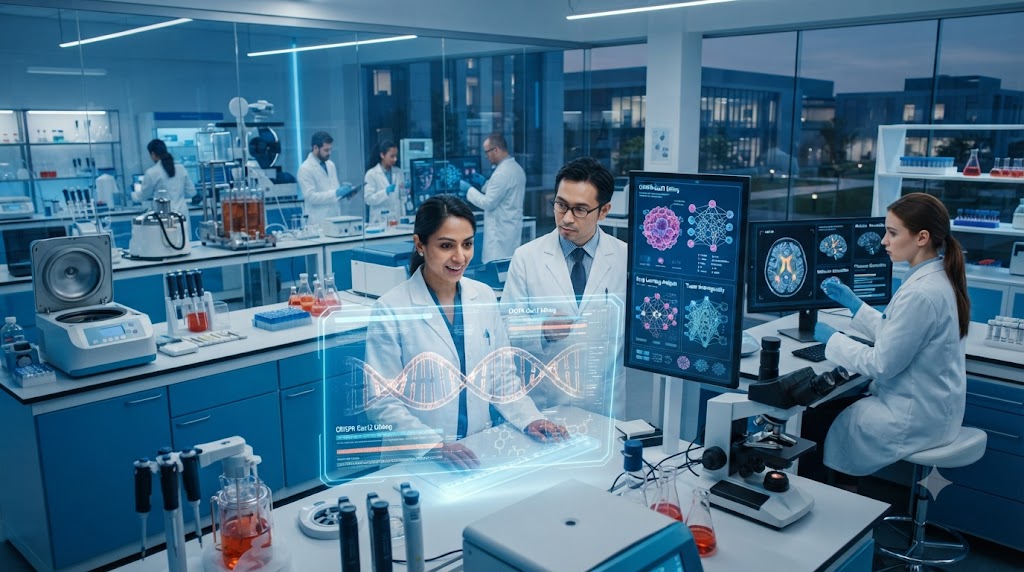
A premium editorial-style 16:9 visualization of the future of medical research in 2026: diverse medical researchers in a sophisticated biotechnology laboratory, glowing DNA double helix, CRISPR gene-editing interface, AI neural-network visualization, cancer cells, brain imaging, molecular data, blood biomarkers, and advanced medical equipment integrated into one realistic scene. Clean modern hospital-laboratory environment, cinematic but scientifically credible, sophisticated blue and white medical atmosphere, realistic people, high detail, professional healthcare magazine aesthetic, no text, no logos, wide composition suitable for a blog banner.