
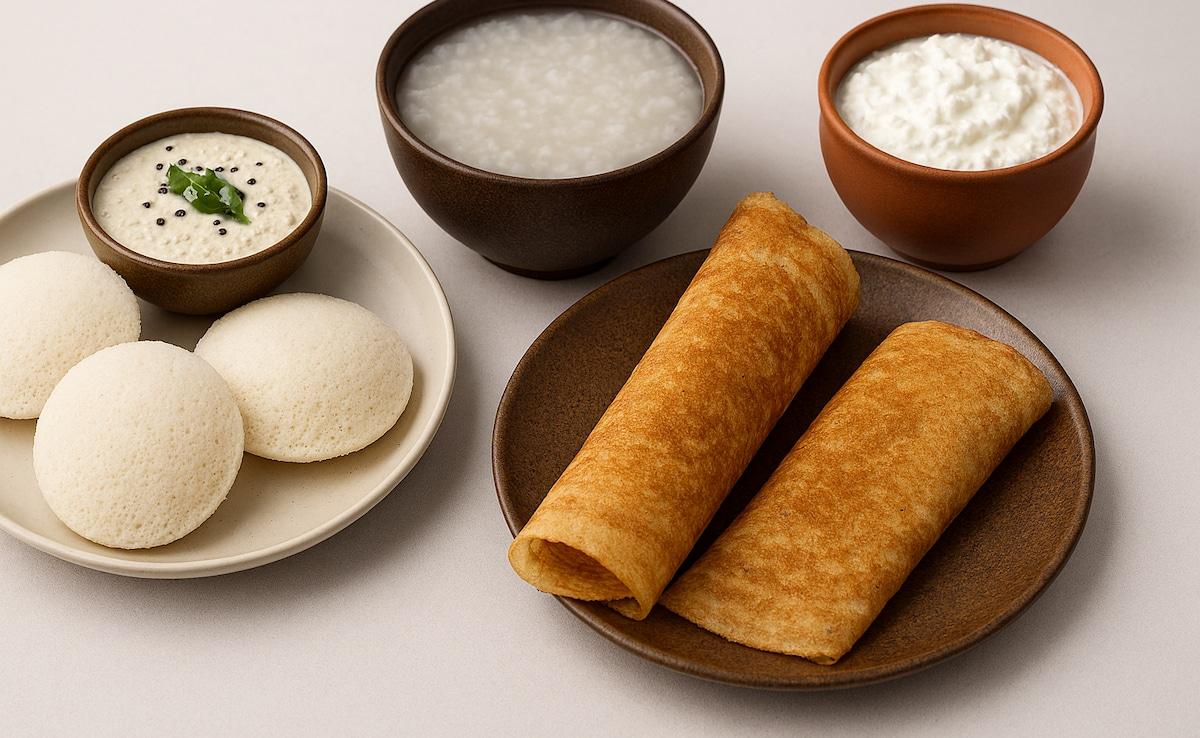
Introduction: Ancient food traditions meet modern microbiome science
For generations, Indian kitchens have relied on fermentation to prepare familiar foods such as idli, dosa, curd, dhokla, kanji and regional fermented rice dishes. These preparations are deeply connected with local ingredients, climate, culinary traditions and household knowledge. Today, researchers are investigating the microorganisms behind these foods and how fermentation changes their nutritional properties.
One reason for this growing interest is the human gut microbiome: the community of bacteria, fungi, viruses and other microorganisms living in the digestive tract. These organisms interact with dietary components and contribute to processes such as carbohydrate fermentation, the production of certain metabolites and the maintenance of intestinal function.
Fermentation and the gut microbiome are related, but they are not the same thing. Microorganisms in a food may be destroyed during cooking, survive digestion in varying numbers, or influence health through compounds produced before consumption. The effects depend on the food, its microbial community, how it is prepared and the person eating it.
A 2026 review in Frontiers in Microbiology examines the potential of traditional Indian fermented foods, including cereal-legume preparations and dairy products. Another 2026 review in Foods explores microbial diversity, modern analytical techniques and possible nutritional applications. Both provide useful starting points for understanding this field, although reviews synthesise existing studies rather than proving that every proposed benefit occurs in humans.
The most useful question is therefore not whether all fermented foods are universally beneficial. It is how specific foods affect nutritional quality, digestion, microbial activity and measurable health outcomes.
What is fermentation, and why does it matter?

Fermentation is a process in which microorganisms use available nutrients and produce substances that change a food’s acidity, aroma, texture and composition. In many Indian fermented foods, lactic acid bacteria play an important role. Yeasts and other microorganisms may also contribute, depending on the ingredients and method.
In idli and dosa batter, for example, microorganisms interact with rice and black gram, commonly known as urad dal. Their activity can produce organic acids and gases, helping the batter develop its characteristic flavour and structure. The precise microbial community varies with temperature, water, ingredient proportions, hygiene and fermentation time.
In curd, selected or naturally introduced bacteria convert lactose, the sugar in milk, into lactic acid. This lowers the pH, changes milk proteins and produces the familiar thick texture and sour taste.
Fermentation can influence food in several ways:
- It may break down some complex compounds and change how readily nutrients are available.
- It may reduce certain antinutritional factors, depending on the food and fermentation conditions.
- It can produce organic acids and other metabolites that affect flavour and food preservation.
- It may support the growth of particular microorganisms, some of which have potential health benefits.
However, fermentation does not automatically increase every nutrient, eliminate every harmful substance or make a food suitable for everyone. The outcome depends on the specific process and final product.
A major scientific challenge is separating changes in the food itself from changes in the human body after the food is eaten. Laboratory experiments can identify promising microorganisms and compounds, but well-designed human studies are needed to determine whether these findings translate into meaningful health benefits.
Idli and dosa: microbial activity in cereal-legume foods

Idli and dosa are among the most familiar examples of Indian cereal-legume fermentation. Their batter generally combines rice with urad dal, creating a mixture of carbohydrates, protein and other nutrients that microorganisms can use during fermentation.
A particularly relevant study was published in Applied and Environmental Microbiology in 2019. Researchers investigated changes in the microbial community during idli fermentation using culture-based methods and DNA sequencing. They observed a succession of microorganisms during fermentation, with lactic acid bacteria playing a major role and Weissella emerging as an important genus. The study also investigated acid production, batter leavening and microbial metabolic activity.
These findings help explain how idli batter changes as it ferments. However, they do not establish that eating idli will necessarily increase beneficial bacteria in the intestines or prevent digestive disease.
How fermentation may influence nutrition
Fermentation can modify the structure of carbohydrates and proteins and reduce some antinutritional compounds, including phytate, under suitable conditions. The extent of these changes varies with the ingredients, fermentation duration and microbial community.
The rice-and-lentil combination is also nutritionally useful because the ingredients contribute different nutrients. Urad dal supplies protein, while rice contributes carbohydrates. Serving idli with sambar can add vegetables, lentils and fibre to the meal.
Dosa follows a similar fermentation process, but its final nutritional profile depends on the batter, cooking oil, portion size and accompanying foods. A heavily oiled dosa with a large portion of a calorie-dense filling will differ nutritionally from a lightly oiled dosa served with vegetable-rich sambar.
Does cooking destroy the microorganisms?
Steaming idli and cooking dosa expose the batter to heat, which is expected to reduce or eliminate many of the live microorganisms present before cooking. Therefore, the live-microbe content of the original batter should not be confused with the live-microbe content of the finished meal.
Even when cooking reduces live microorganisms, fermentation may already have altered the food’s acidity, flavour and chemical composition. Whether these changes produce a meaningful health benefit must be evaluated separately.
Curd (dahi): fermented dairy and digestion

Curd is a particularly interesting fermented food because it combines a familiar Indian culinary tradition with well-established dairy fermentation science.
During curd production, lactic acid bacteria convert lactose into lactic acid. As acidity increases, milk proteins form a gel-like structure, giving curd its characteristic consistency. Depending on the starter culture and fermentation process, the final product can contain different microbial populations.
Curd also provides protein and calcium, although exact amounts depend on the milk, preparation method and serving size.
Lactose digestion and individual tolerance
Some people with lactose malabsorption tolerate yogurt-like fermented dairy products better than milk. Live cultures and the fermentation process can contribute to lactose digestion, although tolerance varies between individuals and products.
This does not mean that every person with lactose intolerance can consume any quantity of curd without symptoms. People with milk-protein allergy must also distinguish that condition from lactose intolerance: fermentation does not make ordinary dairy curd safe for someone with a milk-protein allergy.
Is homemade curd a probiotic?
The term probiotic has a specific scientific meaning. It refers to live microorganisms that confer a demonstrated health benefit when administered in adequate amounts.
Homemade curd may contain live bacteria, but the strains, quantities and survival characteristics are not necessarily measured or standardised. Consequently, it is more accurate to describe it as a fermented food unless specific probiotic properties have been established.
A review of traditional Indian fermented milk products highlights the diversity of their microorganisms while also noting the need for stronger evidence linking specific products and strains to particular health outcomes.
Pakhala, pazhankanji and other traditional fermented rice foods

Traditional rice-based preparations demonstrate that Indian fermentation is not limited to batter and dairy. In Odisha, pakhala is a familiar regional food, while related preparations such as pazhankanji are consumed in parts of southern India.
The details matter: cooked rice may be soaked in water, left for a period of time, refrigerated or consumed with additional ingredients. These variations can change the microbial community, acidity, texture and safety of the finished food.
Researchers studying fermented rice are interested in whether microbial activity changes the availability of nutrients, the types of organic acids produced and the digestibility of starch. These questions are scientifically plausible, but the evidence does not justify assigning the same health benefits to every preparation of pakhala or soaked rice.
What about resistant starch and blood glucose?
Resistant starch is a form of starch that escapes digestion in the small intestine and can be fermented by microorganisms in the large intestine. Depending on cooking, cooling and storage conditions, some cooked starchy foods may develop more resistant starch.
However, several factors influence the blood-glucose response to a meal, including the amount eaten, the type of rice, accompanying protein and fibre, and individual metabolic characteristics.
It would therefore be misleading to claim that all fermented rice lowers blood glucose by a fixed percentage or that pakhala can replace medical treatment for diabetes. More direct human research is needed to establish product-specific effects.
Food safety is essential
Rice is a cooked, moist food that can support microbial growth if stored improperly. Certain bacterial spores, including those of Bacillus cereus, may survive cooking and produce risks when food is held at unsuitable temperatures.
For safer preparation, use clean utensils and potable water, avoid prolonged storage at room temperature, and refrigerate cooked rice promptly if it will not be eaten soon. Do not assume that sourness or fermentation automatically makes rice safe. Discard food that has been stored unsafely or shows signs of spoilage.
Dhokla, kanji and India’s wider fermentation heritage

India’s fermented-food traditions extend across regions and ingredient groups. Dhokla is often made from fermented chickpea-based batter, sometimes with rice or other ingredients. Kanji is a fermented drink that can be prepared from different ingredients, including black carrots or other vegetables, depending on regional tradition and recipe.
Other examples include millet-based preparations such as ambali, pearl millet porridge known as kambu koozh, and a variety of fermented soybean, bamboo shoot and dairy products.
These foods are not microbiologically interchangeable. Their microorganisms depend on the substrate, local environment, starter cultures and processing conditions. Some preparations undergo spontaneous fermentation, while others use defined starter cultures.
A 2026 review in Foods describes how modern techniques, including metagenomics and metabolomics, are being used to investigate this diversity. These tools can identify microorganisms and chemical compounds in fermented foods, helping scientists generate hypotheses about nutritional and biological effects.
Nevertheless, detecting a microorganism in a traditional food is only the beginning of the research process. Scientists must establish whether it survives processing and digestion, whether it produces a relevant effect in humans, and whether the effect is clinically meaningful.
How fermented foods interact with the gut microbiome

The gut microbiome contains many microorganisms that participate in digestion and other biological processes. Some break down dietary fibres that human digestive enzymes cannot fully digest. Their activity can generate short-chain fatty acids (SCFAs), including acetate, propionate and butyrate.
These compounds have different functions in the body. Butyrate, for example, is an important energy source for many cells lining the colon. Microbial metabolites can also influence intestinal conditions and interact with immune and metabolic pathways.
Fermented foods may affect this ecosystem in several ways.
Live microorganisms and microbial exposure
Some fermented foods contain living microorganisms when consumed. These organisms may survive passage through the digestive tract, at least temporarily, depending on the species, food matrix and conditions in the gut.
However, eating a food containing live microbes does not necessarily lead to permanent colonisation or a measurable improvement in health. Some microorganisms may pass through the intestine without establishing themselves.
Fermentation products and microbial activity
Fermentation creates compounds such as organic acids and other metabolites. These substances can affect food composition and may influence digestive processes after consumption. The degree of influence depends on the particular compounds, their amounts and the wider dietary context.
Dietary fibre and the wider diet
A diverse diet containing vegetables, legumes, fruits, whole grains, nuts and seeds supplies substrates that many beneficial gut microorganisms can use. Fermented foods may complement this dietary pattern, but they do not replace fibre-rich foods.
An important human study published in Cell in 2021 investigated diets high in fermented foods or fibre in a small group of healthy adults. The fermented-food intervention was associated with increased gut microbial diversity and reduced levels of several inflammatory markers. The fibre intervention produced different microbiome-related changes. The study is informative, but it does not prove that every fermented food produces the same effects or that all individuals respond similarly.
What human research tells us—and what it does not
A central challenge in microbiome research is that changes in microbial composition do not automatically indicate better health. A change may be beneficial, neutral or context-dependent.
For example, a controlled crossover study involving 87 participants examined fresh and pasteurised sauerkraut consumption over four weeks. Researchers found changes in certain bacterial species, while the overall findings did not suggest that the gut microbiome was transformed uniformly across participants. This study involved a European fermented cabbage product, not Indian foods, so it provides methodological context rather than direct evidence for idli, dosa or pakhala.
The following table separates findings from research questions that remain open.
| Research area | Current interpretation |
|---|---|
| Microbial diversity in idli batter | Directly investigated using DNA sequencing and culture-based methods. |
| Nutritional changes during fermentation | Supported by food-science research; effects vary by ingredients and process. |
| Gut microbiome effects of fermented-food diets | Human evidence exists, but outcomes depend on the intervention and population. |
| Specific benefits of pakhala for blood glucose | Not established sufficiently to support a general health claim. |
| Prevention of cancer or chronic disease by Indian fermented foods | Not established for routine consumption of these foods as a whole. |
| Probiotic benefits of a particular homemade food | Requires evidence for the relevant strains, dose and health outcome. |
The distinction matters because some research on Indian fermented foods reports promising laboratory or animal findings. Such studies can identify potential mechanisms, but they should not be presented as proof of disease prevention or treatment in humans.
How to include fermented foods in a balanced Indian diet

For most people who tolerate them, traditional fermented foods can be part of a varied, balanced diet. There is no universally established number of servings required to improve the gut microbiome, so practical dietary choices should focus on nutritional balance, preference and tolerance.
- Breakfast: Idli with sambar and a moderate amount of chutney provides a combination of cereal, pulses and vegetables.
- Lunch: Include plain curd with a meal containing vegetables, pulses and whole grains, if dairy is tolerated.
- Regional meals: Enjoy pakhala prepared with appropriate food-safety practices and pair it with suitable vegetable and protein sources.
- Snacks: Dhokla can be a useful option, particularly when portion sizes and added oil are considered.
- Dietary variety: Rotate grains, legumes, vegetables and other plant foods instead of relying on a single fermented product.
These are general meal ideas, not a prescribed microbiome treatment. A person’s nutritional requirements may differ because of age, medical conditions, food allergies, lactose intolerance or other dietary restrictions.
Does more fermentation mean more health benefits?
Not necessarily. Longer fermentation may increase acidity or change microbial populations, but it can also alter texture, flavour and food quality. Excessively prolonged or uncontrolled fermentation can create food-safety problems.
Follow a reliable recipe, use clean equipment, choose suitable ingredients and pay attention to temperature and storage. For dairy products, use safe milk and appropriate fermentation practices. For rice-based foods, avoid leaving cooked rice at room temperature for extended periods.
The goal is safe, enjoyable food—not maximum fermentation time or the highest possible microbial count.
Limitations, safety and future research 🔬
Although traditional Indian fermented foods are promising subjects for nutritional research, several limitations need attention.
First, microbial variability: Two batches of homemade curd or idli batter may contain different microorganisms. Temperature, water quality, ingredients and preparation methods can all affect the final product.
Second, limited clinical evidence: Many studies focus on food chemistry, isolated microbial strains, laboratory experiments or animal models. More controlled human trials are needed to determine which foods provide measurable benefits, in what amounts, and for which populations.
Third, individual differences: The gut microbiome is influenced by diet, medication, age, environment and health status. A food that one person tolerates well may cause discomfort in another.
Fourth, food safety: Fermentation does not guarantee the elimination of pathogens or toxins. This is particularly important for uncontrolled fermentation and foods stored in warm conditions.
Future studies could investigate traditional foods using metagenomics, metabolomics and controlled dietary interventions. Researchers could compare different preparation methods, measure changes in gut microbial activity, monitor digestive symptoms and assess clinically relevant outcomes. Regional foods such as Odisha’s pakhala deserve particular attention, provided the research distinguishes traditional knowledge from demonstrated clinical effects.
A promising direction is personalised nutrition: understanding whether particular dietary patterns benefit different individuals according to their baseline microbiome and metabolic characteristics. This remains an evolving research area rather than an established reason to prescribe specific fermented foods.
Conclusion: Preserving tradition while following the evidence
Traditional Indian fermented foods represent a valuable intersection of food culture, microbiology and nutrition. Idli and dosa demonstrate how cereal-legume fermentation changes batter properties, curd illustrates the relationship between dairy fermentation and lactose digestion, and pakhala highlights the diversity of regional rice-based food practices.
Modern research is beginning to characterise the microorganisms and chemical transformations involved in these foods. Human studies of fermented-food diets also suggest that some dietary interventions can influence the gut microbiome and selected health markers. Nevertheless, these findings cannot be applied indiscriminately to every Indian fermented food.
The practical lesson is simple: enjoy safe, culturally familiar fermented foods as part of a varied diet, but avoid treating them as guaranteed probiotics or cures for digestive and metabolic diseases.
The future of this research lies in combining traditional culinary knowledge with rigorous food-safety standards, microbiological analysis and well-designed clinical studies. Such work could help establish which foods offer meaningful benefits while preserving India’s remarkable regional food heritage.
Research references
The following scientific sources provide a starting point for further reading.

Unlocking the health potential of fermented foods: insights from traditional Indian diets (2026)
Frontiers in Microbiology · Review article
Reviews Indian fermented foods, their microorganisms and proposed health-related mechanisms.

Decoding the Microbial Diversity of Indian Fermented Foods: Integrating Ethnobiology, Multi-Omics and Functional Insights (2026)
Foods · Review article
Examines microbial diversity, analytical approaches and potential functional properties of India’s fermented foods.

Diversity and Succession of Microbiota during Fermentation of the Traditional Indian Food Idli (2019)
Applied and Environmental Microbiology · Original research
Investigates microbial changes during idli fermentation using molecular and culture-based techniques.

Gut Microbiota-Targeted Diets Modulate Human Immune Status (2021)
Cell · Human dietary intervention study
Compares fermented-food and high-fibre dietary interventions and their effects on microbiome and immune-related measurements.

Microbial diversity and functionality of traditional fermented milk products of India: Current scenario and future perspectives (2021)
International Dairy Journal · Review article
Reviews microbial diversity and the evidence base for traditional Indian fermented dairy products.
Editorial note: This article is intended for general education and nutrition awareness. It distinguishes research findings from possible benefits and does not substitute for individual medical advice.